The 24 Hours of Le Mans has always been a crucible of automotive innovation, but never more so than in the Hypercar era. At the heart of this new category lies a delicate balancing act—one that seeks to level the playing field between wildly different powertrain philosophies while preserving the essence of endurance racing. The FIA and ACO's "Balance of Performance" (BoP) system isn't just about adding ballast or restricting turbo boost; it's an ongoing experiment in engineering democracy, where hydrogen, hybrid, and pure combustion machines must coexist without any single approach dominating.
The Hypercar rulebook reads like a manifesto for motorsport's future. Unlike the prescriptive LMP1 regulations that preceded it, the framework intentionally avoids favoring any specific technology. Manufacturers can field cars with combustion engines (naturally aspirated or turbocharged), hybrid systems (front-axle, rear-axle, or all-wheel-drive), or even hydrogen-electric powertrains—provided they all fall within the same performance window. This radical inclusivity has attracted an unprecedented variety of participants, from Toyota's twin-turbo V6 hybrid to Peugeot's wingless diesel-hybrid and Ferrari's screaming V12.
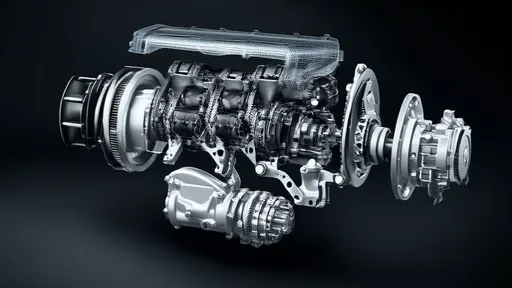
What makes this equilibrium possible is a constantly evolving web of performance levers. Engineers at the ACO's technical department monitor everything from energy deployment rates to aerodynamic efficiency, adjusting parameters between races—sometimes even during the 24-hour event itself. The hybrid systems, which can deliver up to 200kW of electrical power, are particularly fascinating. A rear-wheel-drive hybrid might receive more energy allowance than an all-wheel-drive competitor to compensate for traction disadvantages, while hydrogen-powered entries get bespoke fuel flow calculations to account for their unique combustion characteristics.
Critics initially dismissed BoP as "artificial racing," but the 2023 season silenced most detractors. The winning margin at Le Mans shrank to just 1'21" after 3,367 km of racing—the closest finish in Hypercar history. This wasn't achieved by making all cars identical; rather, the system allowed each manufacturer's engineering identity to shine while neutralizing inherent advantages. Toyota's hybrid expertise translated into phenomenal acceleration out of slow corners, while Peugeot's unconventional aerodynamics gave it an edge on the Mulsanne Straight. The BoP became less about restriction and more about translation—converting different engineering languages into equal track performance.
The human element in this balancing act cannot be overstated. Behind every technical adjustment lies months of real-world testing and simulation data. Before each race, manufacturers submit their cars for "BoP validation runs" at designated circuits, where officials measure true performance potential away from sandbagging accusations. Even then, the process remains partly subjective—the ACO admits that factors like driver skill and team strategy are impossible to quantify. This blend of data and intuition creates a living document of regulations, sometimes updated hourly during endurance events as weather conditions shift.
Perhaps the most revolutionary aspect is how Hypercar BoP has influenced road car development. Manufacturers now treat racing as a laboratory for multiple technologies rather than betting everything on one approach. Toyota's H2 concept, which finished a developmental hydrogen class at Le Mans, directly informed their Mirai road car program. Similarly, Ferrari's decision to race a non-hybrid V12 forced them to innovate in combustion efficiency—knowledge now applied to their road-going GT cars. The regulations have effectively made motorsport relevant to automakers pursuing divergent road car strategies.
As Hypercar entries multiply (with Lamborghini, BMW, and Alpine joining in 2024), the balancing act grows more complex. The upcoming inclusion of hydrogen combustion vehicles will test the system's flexibility like never before. Yet this very complexity may be the category's greatest strength. In an era where the automotive industry faces existential questions about propulsion, having a racing formula that doesn't pick winners—but instead makes all solutions competitive—might be the most authentic form of motorsport possible.
The 24 Hours of Le Mans has always reflected the state of automotive progress. Today, that reflection shows a landscape where different visions of the future can race wheel-to-wheel, not as enemies but as equal participants in engineering's greatest endurance test. The Hypercar regulations don't just balance performance—they balance philosophies, proving that in racing as in life, there can be multiple paths to the same finish line.

By /Jun 14, 2025

By /Jun 14, 2025
By /Jun 14, 2025
By /Jun 14, 2025
By /Jun 14, 2025
By /Jun 14, 2025
By /Jun 14, 2025
By /Jun 14, 2025
By /Jun 14, 2025
By /Jun 14, 2025

By /Jun 14, 2025
By /Jun 14, 2025
By /Jun 14, 2025
By /Jun 14, 2025
By /Jun 14, 2025
By /Jun 14, 2025
By /Jun 14, 2025
