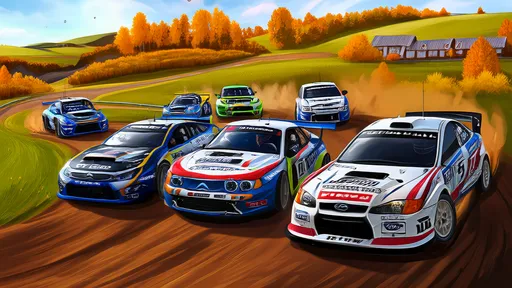
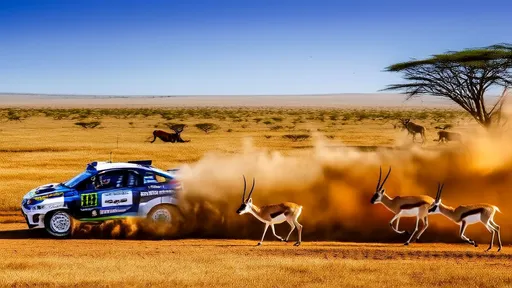
The 2005 World Rally Championship (WRC) season was a battleground like no other. Seven different manufacturers—Citroën, Ford, Mitsubishi, Peugeot, Škoda, Subaru, and reigning champions Citroën—entered the fray, each armed with cutting-edge technology, relentless drivers, and the ambition to dominate. What unfolded was a chaotic, unpredictable, and thrilling season where no single team could establish clear supremacy. Instead, the championship became a war of attrition, adaptability, and sheer willpower.
The Citroën Conundrum
Citroën entered 2005 as the defending champions, but their dominance from previous years was far from guaranteed. Sébastien Loeb, the rising star of rallying, was now shouldering the weight of expectation. The Xsara WRC, though proven, was aging in a field where rivals were rapidly evolving. Loeb’s mastery on tarmac remained unchallenged, but gravel rallies exposed vulnerabilities. The team’s strategy hinged on precision—maximizing points where they were strongest and minimizing losses elsewhere. It was a high-wire act, and Loeb executed it with near-flawless consistency.
Ford’s Resurgence
Ford, with the Focus RS WRC 04, was a sleeping giant awakening. The car was reliable, if not the fastest, and Marcus Grönholm’s move to the team injected fresh energy. Grönholm, a two-time world champion, brought a no-nonsense approach, pushing the Focus to its limits. His battles with Loeb became the stuff of legend, particularly on the loose surfaces where the Finn’s aggressive style paid dividends. Ford’s resurgence wasn’t just about Grönholm—Toni Gardemeister’s underdog performances added depth, proving the Focus could compete across varied terrains.
Mitsubishi’s Last Stand
Mitsubishi’s presence in 2005 was bittersweet. The Lancer WRC05, a car plagued by development delays, finally showed glimpses of its potential. Harri Rovanperä’s podium in Sweden was a fleeting highlight in a season marred by mechanical failures. The team’s financial struggles loomed large, and by year’s end, Mitsubishi’s withdrawal from WRC was confirmed. Their 2005 campaign was a swan song—a reminder of what might have been had the stars aligned differently.
Peugeot’s Fading Glory
Peugeot, once a dominant force, was now fighting to stay relevant. The 307 WRC, while innovative, struggled with reliability. Markko Märtin’s switch from Ford to Peugeot was supposed to reinvigorate the team, but the Estonian’s season was derailed by retirements. The car’s pace was undeniable on its day, but those days were too few. Peugeot’s decline mirrored the broader shift in WRC—manufacturers who couldn’t adapt quickly enough were left behind.
Škoda’s Underdog Spirit
Škoda, the perennial underdog, entered 2005 with cautious optimism. The Fabia WRC was improving, but outright wins remained elusive. Alex Bengue’s flashes of speed, particularly in Corsica, hinted at progress. Yet, the team’s focus was clearly on the future—laying groundwork for a program that would eventually bear fruit. In a season of giants, Škoda’s quiet perseverance earned respect, even if not trophies.
Subaru’s Rollercoaster
Subaru’s season was a rollercoaster of highs and lows. Petter Solberg, the 2003 champion, was a constant threat, but the Impreza WRC 05 struggled for consistency. Solberg’s victory in Mexico was a masterclass, but too often, the car’s fragility cost him dearly. The team’s inability to match Citroën’s reliability or Ford’s raw pace left Solberg fighting an uphill battle. Subaru’s 2005 campaign was a testament to resilience, but also a stark reminder that passion alone couldn’t bridge the gap to the top.
The Wildcards and Privateers
Beyond the factory teams, privateers added another layer of intrigue. Gilles Panizzi’s tarmac expertise, Manfred Stohl’s gritty performances, and Xavier Pons’ emergence as a future star kept the midfield fiercely competitive. These drivers, often in older machinery, proved that WRC wasn’t just about manufacturer budgets—it was about skill, adaptability, and sometimes, sheer luck.
The Championship Decider
By season’s end, the title fight came down to Loeb and Grönholm. Loeb’s clinical efficiency on mixed surfaces gave him the edge, but Grönholm’s late-season charge kept the tension alive. In the end, Loeb secured his second consecutive title, but the numbers didn’t tell the full story. Seven brands had fought, each leaving their mark on a season that redefined what it meant to compete in WRC.
The 2005 WRC season was a celebration of diversity—a year where no single philosophy dominated. It was a reminder that in rallying, as in life, the most compelling stories are written not by those who lead from the front, but by those who refuse to yield.

By /Jun 14, 2025
By /Jun 14, 2025
By /Jun 14, 2025
By /Jun 14, 2025
By /Jun 14, 2025
By /Jun 14, 2025
By /Jun 14, 2025
By /Jun 14, 2025
By /Jun 14, 2025
By /Jun 14, 2025
By /Jun 14, 2025
By /Jun 14, 2025
By /Jun 14, 2025
By /Jun 14, 2025
By /Jun 14, 2025
By /Jun 14, 2025
By /Jun 14, 2025
