F1 Ground Effect Returns: How Will the 2026 Regulations Change Overtaking?

Jun 14, 2025 By

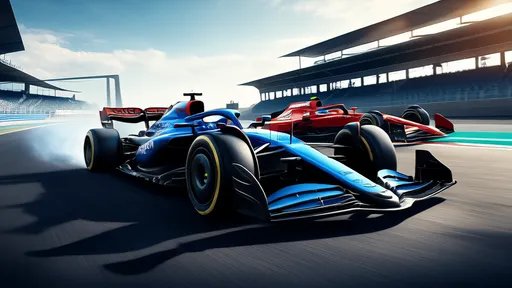
The return of ground effect aerodynamics in Formula 1 has been one of the most significant technical shifts in recent years, and its evolution continues to shape the future of the sport. As the FIA prepares for the 2026 regulation overhaul, the focus remains on enhancing wheel-to-wheel racing and improving overtaking opportunities. The upcoming changes promise to redefine how cars interact with dirty air and how drivers can attack or defend positions on track. But what exactly will these adjustments mean for the spectacle of F1 racing?

Ground effect, reintroduced in 2022, was meant to reduce the turbulent wake behind cars, allowing following drivers to stay closer through corners. While it succeeded to some extent, the 2026 regulations aim to refine this concept further. The new rules will likely tweak the underfloor designs, potentially increasing downforce generated by the diffuser while minimizing reliance on upper-body aerodynamics. This shift could make the trailing car less susceptible to losing grip when chasing another, creating more consistent performance in dirty air.

One critical area of development is the balance between mechanical grip and aerodynamic dependence. Current cars still lose considerable downforce when running closely behind another vehicle, particularly in high-speed corners. The 2026 regulations may address this by mandating simpler front and rear wings, reducing their sensitivity to turbulent airflow. If executed well, this could allow drivers to carry higher cornering speeds when following, setting up better overtaking opportunities on the following straights.

The power unit revolution coming in 2026 will also play a crucial role in changing overtaking dynamics. With engines becoming more energy-recovery focused and potentially producing over 50% of their power electrically, acceleration out of corners may become more dramatic. This could lead to stronger slipstream effects on straights, as the sudden bursts of electric power might create larger speed differentials between attacking and defending cars. However, the exact impact will depend on how the FIA balances energy deployment rules to prevent excessive battery-powered "push-to-pass" systems from making overtakes too artificial.

Another fascinating aspect of the 2026 changes involves tire design. Pirelli is working on new compounds that could better withstand the stresses of close racing. Current tires often overheat when cars run in dirty air for prolonged periods, forcing drivers to back off. If the 2026-spec tires can maintain more consistent temperatures in turbulent conditions, we might see longer sustained battles where drivers can pressure each other lap after lap without destroying their rubber.

The weight of the cars remains a concern, however. Despite efforts to make vehicles lighter, the 2026 machines might still tip the scales at nearly 800kg due to heavier batteries and safety structures. This could affect how quickly cars can change direction when dueling and how late they can brake into overtaking zones. Some engineers suggest that the FIA might introduce revised brake-by-wire systems to compensate for the increased mass, potentially giving drivers more tools to attempt daring overtakes.

Perhaps the most intriguing potential change lies in active aerodynamics. While ground effect remains passive, the 2026 rules might introduce movable aerodynamic components that adjust automatically based on following distance. Such systems could theoretically maintain optimal downforce regardless of whether a car is leading or chasing, revolutionizing how drivers approach overtaking. However, this remains controversial, as purists argue it would remove an essential skill element from racing.

As teams begin to develop their 2026 challengers, simulator work is already revealing how these changes might play out on track. Early data suggests that the combination of refined ground effect and reduced aero sensitivity could create racing where drivers can follow within 0.3 seconds through high-speed corners, compared to the current 0.7-second threshold before significant downforce loss occurs. This tighter performance window might lead to more position swaps through technical sections rather than just on straights with DRS.

The DRS system itself faces an uncertain future in this new era. Originally introduced to compensate for overtaking difficulties, its role might diminish if the 2026 cars can follow closely naturally. Some proposals suggest replacing it with a more subtle overtaking aid or removing it entirely to test the effectiveness of the new aerodynamic philosophy. Such a move would represent a major shift in F1's approach to facilitating overtaking after more than a decade of DRS-dependent racing.

Driver feedback on these impending changes has been mixed. While most welcome any improvement in racing quality, some express concerns about cars becoming too easy to drive closely, potentially reducing the skill required to execute clean overtakes. The challenge for regulators is finding the sweet spot where overtaking becomes possible but still requires genuine driver skill and bravery to complete successfully.

As the 2026 season approaches, all eyes will be on how these technical evolutions translate to on-track action. Will ground effect's refinement finally deliver the close racing F1 has promised for years? Can the new power units create exciting new overtaking dynamics without artificial aids? The answers to these questions will shape Formula 1's competitive landscape for years to come, potentially creating a golden era of wheel-to-wheel racing or exposing new challenges in the perpetual quest for the perfect overtake.

Recommend Posts
Auto

Dakar Helicopter Rescue: The Air ICU in the Desert

By /Jun 14, 2025

The vast, unforgiving expanse of the Dakar Desert has long been a proving ground for human endurance and technological innovation. Each year, the Dakar Rally pushes competitors to their limits, but behind the scenes, another battle rages—one fought not for glory, but for survival. High above the dunes, a fleet of specialized medical helicopters operates as airborne intensive care units, ready to swoop in when disaster strikes.
Auto

Chaos of Heroes Era: 2005 WRC Seven Brands' Championship History"

By /Jun 14, 2025

The 2005 World Rally Championship (WRC) season was a battleground like no other. Seven different manufacturers—Citroën, Ford, Mitsubishi, Peugeot, Škoda, Subaru, and reigning champions Citroën—entered the fray, each armed with cutting-edge technology, relentless drivers, and the ambition to dominate. What unfolded was a chaotic, unpredictable, and thrilling season where no single team could establish clear supremacy. Instead, the championship became a war of attrition, adaptability, and sheer willpower.
Auto

How Does the Audi R18 TDI's Diesel Engine Dominate Le Mans?

By /Jun 14, 2025

The Audi R18 TDI stands as a testament to the ingenuity and relentless pursuit of performance that defines endurance racing. When it first roared onto the Circuit de la Sarthe, it wasn’t just another prototype—it was a statement. A diesel-powered machine in a world dominated by gasoline engines, the R18 TDI didn’t just compete; it dominated. Its success at the 24 Hours of Le Mans wasn’t accidental. It was the result of meticulous engineering, strategic innovation, and a deep understanding of the unique demands of endurance racing.
Auto

The Art of Balancing Different Power Formats in Le Mans Hypercar Regulations

By /Jun 14, 2025

The 24 Hours of Le Mans has always been a crucible of automotive innovation, but never more so than in the Hypercar era. At the heart of this new category lies a delicate balancing act—one that seeks to level the playing field between wildly different powertrain philosophies while preserving the essence of endurance racing. The FIA and ACO's "Balance of Performance" (BoP) system isn't just about adding ballast or restricting turbo boost; it's an ongoing experiment in engineering democracy, where hydrogen, hybrid, and pure combustion machines must coexist without any single approach dominating.
Auto

How to Protect High-Voltage Batteries in Hybrid Systems During Flight?

By /Jun 14, 2025

The high-voltage battery systems in World Rally Championship (WRC) hybrid vehicles face extreme conditions—violent jumps, rough terrain, and rapid acceleration. Protecting these critical components isn’t just about durability; it’s a matter of safety, performance, and regulatory compliance. Engineers have developed sophisticated solutions to ensure these batteries withstand the brutal demands of rally racing while delivering peak power when needed most.
Auto

F1 Ground Effect Returns: How Will the 2026 Regulations Change Overtaking?

By /Jun 14, 2025

The return of ground effect aerodynamics in Formula 1 has been one of the most significant technical shifts in recent years, and its evolution continues to shape the future of the sport. As the FIA prepares for the 2026 regulation overhaul, the focus remains on enhancing wheel-to-wheel racing and improving overtaking opportunities. The upcoming changes promise to redefine how cars interact with dirty air and how drivers can attack or defend positions on track. But what exactly will these adjustments mean for the spectacle of F1 racing?
Auto

Behind NIO EP9's Nurburgring Record: The Ambition of Chinese Electric Supercars

By /Jun 14, 2025

The Nürburgring Nordschleife, often referred to as the "Green Hell," is a 20.8-kilometer ribbon of tarmac that has long been the ultimate proving ground for performance cars. For decades, the leaderboard of this legendary German circuit was dominated by European marques like Porsche, Lamborghini, and Mercedes-Benz. That was until 2017, when a Chinese electric hypercar stunned the automotive world by claiming the production car lap record. The NIO EP9, a futuristic all-electric machine from Shanghai, lapped the Nordschleife in an astonishing 6:45.90 – a time that placed it ahead of every production car that had ever tackled the track.
Auto

Baha 1000: Modified Pickup's Self-Destruction in the Mexican Desert"

By /Jun 14, 2025

The Baja 1000 is not just a race—it’s a brutal test of man and machine against some of the most unforgiving terrain on the planet. Stretching over 1,000 miles of Mexico’s Baja California Peninsula, the race demands speed, endurance, and a willingness to embrace chaos. But in recent years, a new trend has emerged: heavily modified pickup trucks, built to conquer the desert, often end up destroying themselves in the process. These machines, engineered to withstand punishment, frequently meet their demise not at the hands of competitors, but through their own excesses.
Auto

From Nazca to Le Mans: Jimmie Johnson's Dual Adventure

By /Jun 14, 2025

The world of motorsport has witnessed many legends, but few have dared to cross the boundaries of their discipline to test their skills in entirely different racing arenas. Jimmie Johnson, a seven-time NASCAR Cup Series champion, is one such rare breed. His journey from the high-speed ovals of NASCAR to the endurance challenges of the 24 Hours of Le Mans is a story of ambition, adaptability, and an unquenchable thirst for competition.
Auto

MotoE World Cup: The Fast Charging Challenge of Electric Moto Racing

By /Jun 14, 2025

The MotoE World Cup has emerged as one of the most exciting developments in motorsport, showcasing the potential of electric motorcycles on a global stage. While the racing itself delivers high-speed thrills, one of the most critical challenges facing the series is the rapid charging infrastructure required to keep these machines competitive. Unlike traditional internal combustion engines that can be refueled in seconds, electric bikes demand sophisticated charging solutions to minimize downtime during races.
Auto

Truck Team's Nightmare: The Accident Rescue Record of a 500-Horsepower Colossus"

By /Jun 14, 2025

The night air hung thick with diesel fumes as the tow truck's floodlights carved jagged shadows across the mangled guardrail. What should have been a routine highway patrol had turned into a six-hour odyssey of hydraulic winches, shouted warnings, and the ever-present dread of 18 tons of steel deciding to finish its gravity-fueled descent into the ravine. This wasn't just any recovery operation—it was a dance with a 500-horsepower leviathan that had already demonstrated its contempt for the laws of physics.
Auto

WRC Kenya Stage: A Wild Race Course with Wildlife and Racing Cars

By /Jun 14, 2025

The WRC Safari Rally Kenya is unlike any other event in the World Rally Championship calendar. Where else can you find high-speed rally cars tearing through rugged terrain while elephants, giraffes, and lions roam nearby? This is motorsport at its most untamed—a thrilling collision of man, machine, and nature that pushes drivers to their limits while demanding respect for the wild landscapes they invade.
Auto

Jeddah Circuit, Saudi Arabia: A Record of Safety Upgrades for the Most Dangerous Street Race

By /Jun 14, 2025

The Jeddah Corniche Circuit has earned a fearsome reputation since its Formula 1 debut in 2021. Nestled between the Red Sea and Saudi Arabia's bustling second city, this high-speed street track immediately became known as the most dangerous circuit on the calendar – a title that organizers have been working tirelessly to shed through extensive safety upgrades.
Auto

Porsche 911 Dakar: How Crazy is the Off-Road Capable 911?

By /Jun 14, 2025

The Porsche 911 has always been an icon of performance, a symbol of precision engineering tailored for the tarmac. But what happens when Stuttgart’s finest decides to take its legendary sports car off-road? The answer is the Porsche 911 Dakar, a machine that defies convention and redefines what a 911 can do. This isn’t just a rally-inspired novelty—it’s a full-blooded, dirt-slaying reinterpretation of the classic sports car formula, and it’s every bit as insane as it sounds.
Auto

Ferrari Daytona SP3: A V12 Hybrid Masterpiece Paying Tribute to Classics

By /Jun 14, 2025

The automotive world stood still when Ferrari unveiled the Daytona SP3, a machine that effortlessly bridges the gap between the golden era of racing and the cutting-edge technology of today. This isn't merely another hypercar; it's a rolling sculpture that pays homage to Ferrari's legendary sports prototypes of the 1960s while showcasing what modern engineering can achieve when unleashed without constraints.
Auto

Deciphering Toyota's THS Hybrid System: The Mystery of 25 Years of Technological Accumulation

By /Jun 14, 2025

For over two decades, Toyota’s Hybrid Synergy Drive (THS) has stood as a benchmark in hybrid vehicle technology. Since its debut in the iconic Prius, the system has undergone continuous refinement, blending efficiency, reliability, and performance in a way few competitors have matched. What sets THS apart isn’t just its engineering brilliance but the philosophy behind it—a relentless pursuit of incremental improvement rather than chasing fleeting trends. This deep dive explores how Toyota’s 25-year journey with THS has shaped the hybrid landscape.
Auto

Ideal L8 vs. AITO M7: The Battle for Family Users in Extended-Range SUVs

By /Jun 14, 2025

The battle for dominance in the family-oriented extended-range SUV market is heating up, with two Chinese automotive heavyweights—Li Auto's L8 and AITO's M7—vying for consumer attention. Both vehicles promise the perfect blend of electric efficiency and long-distance capability, but they cater to slightly different sensibilities within the same demographic. As families increasingly prioritize space, comfort, and versatility, these models represent the cutting edge of China's booming new energy vehicle sector.