The Audi R18 TDI stands as a testament to the ingenuity and relentless pursuit of performance that defines endurance racing. When it first roared onto the Circuit de la Sarthe, it wasn’t just another prototype—it was a statement. A diesel-powered machine in a world dominated by gasoline engines, the R18 TDI didn’t just compete; it dominated. Its success at the 24 Hours of Le Mans wasn’t accidental. It was the result of meticulous engineering, strategic innovation, and a deep understanding of the unique demands of endurance racing.
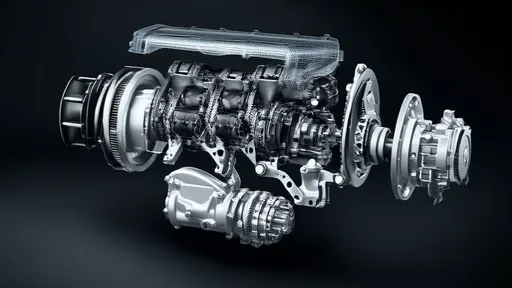
The diesel revolution in endurance racing wasn’t an overnight phenomenon. Audi had been experimenting with diesel technology for years, but the R18 TDI marked the culmination of that effort. Unlike gasoline engines, which prioritize high-revving power, diesel engines excel in torque and fuel efficiency—two critical factors in a race where every drop of fuel and every moment of acceleration counts. The R18 TDI’s 3.7-liter V6 turbocharged diesel engine delivered relentless torque across a wide rev range, allowing it to power out of corners with brutal efficiency while sipping fuel at a rate that left competitors scrambling to keep up.
Le Mans is as much a test of endurance for the car as it is for the drivers. The R18 TDI’s reliability became one of its most formidable weapons. Diesel engines, by design, are built to withstand higher compression ratios and tougher operating conditions. This inherent durability translated into fewer mechanical failures during the grueling 24-hour race. While other teams were forced to pit for unscheduled repairs, the R18 TDI kept circulating, racking up laps with metronomic consistency. It wasn’t just fast—it was unbreakable.
The aerodynamics of the R18 TDI were another cornerstone of its success. Audi’s engineers crafted a car that sliced through the air with minimal resistance while generating enough downforce to stay planted through the high-speed corners of Le Mans. The closed cockpit design, a departure from the open-top prototypes of earlier years, reduced drag and improved stability. Every curve, every vent, and every wing was optimized to balance speed and control, ensuring the R18 TDI was as efficient in a straight line as it was through the Porsche Curves.
Strategy played a pivotal role in the R18 TDI’s dominance. Diesel’s superior fuel economy meant fewer pit stops, and in endurance racing, time spent in the pits is time lost on the track. Audi’s pit crew operated with military precision, but it was the car’s ability to stretch each tank of fuel that gave it an edge. While gasoline-powered rivals had to refuel every 10-12 laps, the R18 TDI could often go 14 or more laps between stops. Over the course of 24 hours, those extra laps added up to a decisive advantage.
The R18 TDI wasn’t just a marvel of engineering—it was a psychological weapon. Competing teams knew that beating Audi would require perfection. Even the slightest mistake or mechanical hiccup could hand the race to the diesel-powered juggernaut. The car’s reputation for reliability and efficiency forced others to push beyond their limits, often leading to mistakes. Audi’s rivals weren’t just racing against a car; they were racing against an idea—the idea that diesel could not only compete but redefine what was possible in endurance racing.
By the time the R18 TDI retired from competition, it had cemented its place in motorsport history. Its victories at Le Mans weren’t just wins; they were validations of a bold engineering philosophy. Diesel technology, once considered unfit for high-performance racing, had been proven not just viable but superior in the most demanding environment imaginable. The R18 TDI’s legacy endures not only in the trophies it claimed but in the way it changed the conversation about what a racing engine could be.
The story of the Audi R18 TDI is one of innovation meeting opportunity. It arrived at a time when fuel efficiency and sustainability were becoming priorities, even in motorsport. By harnessing the strengths of diesel technology and refining them to perfection, Audi didn’t just win races—they rewrote the rulebook. The R18 TDI wasn’t just a car; it was a revolution on wheels.

By /Jun 14, 2025

By /Jun 14, 2025
By /Jun 14, 2025
By /Jun 14, 2025
By /Jun 14, 2025
By /Jun 14, 2025
By /Jun 14, 2025
By /Jun 14, 2025
By /Jun 14, 2025
By /Jun 14, 2025

By /Jun 14, 2025

By /Jun 14, 2025
By /Jun 14, 2025

By /Jun 14, 2025
By /Jun 14, 2025
By /Jun 14, 2025

By /Jun 14, 2025
