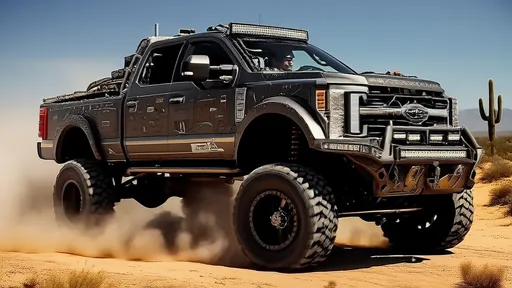
The Baja 1000 is not just a race—it’s a brutal test of man and machine against some of the most unforgiving terrain on the planet. Stretching over 1,000 miles of Mexico’s Baja California Peninsula, the race demands speed, endurance, and a willingness to embrace chaos. But in recent years, a new trend has emerged: heavily modified pickup trucks, built to conquer the desert, often end up destroying themselves in the process. These machines, engineered to withstand punishment, frequently meet their demise not at the hands of competitors, but through their own excesses.
The allure of the Baja 1000 for pickup truck teams is undeniable. The race offers a chance to prove a truck’s mettle in extreme conditions, pushing engineering to its limits. Manufacturers and privateers alike pour millions into developing vehicles capable of surviving the relentless whoops, jagged rocks, and bottomless silt beds that define the course. Yet, despite the cutting-edge technology and meticulous preparation, many of these trucks never see the finish line. Instead, they succumb to self-inflicted wounds—overheating, suspension failures, or catastrophic engine blowouts—all symptoms of pushing too hard, too fast.
The desert is a great equalizer. No amount of horsepower or suspension travel can fully negate the brutal reality of Baja. Teams often fall into the trap of over-engineering their trucks, adding massive turbochargers, reinforced chassis components, and suspension systems capable of absorbing jumps that would cripple a trophy truck. But the desert doesn’t reward brute force alone. The trucks that survive are the ones that balance power with reliability, speed with durability. Those that don’t? They become cautionary tales—twisted metal and broken dreams littering the side of the course.
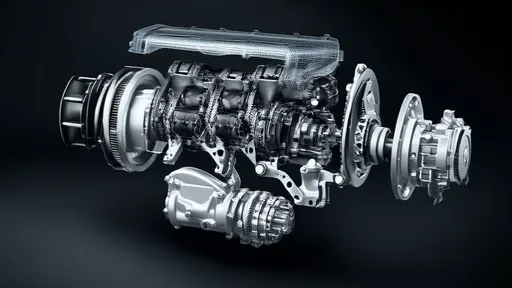
One of the most common ways these modified pickups meet their end is through engine failure. In the quest for dominance, teams frequently tune their engines to produce ludicrous amounts of power, far beyond what the stock internals can handle. The result is predictable: pistons melt, connecting rods snap, and blocks crack under the strain. The Baja 1000 is a marathon, not a sprint, and engines pushed to their absolute limits for hours on end rarely survive the ordeal. Even with auxiliary cooling systems and reinforced components, the laws of physics are undefeated.
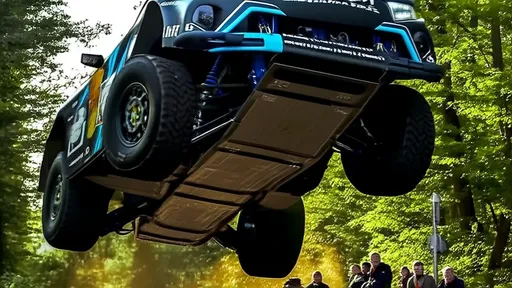
Suspension systems are another weak point. The desert’s endless whoops—a series of closely spaced, bone-jarring bumps—act like a jackhammer on even the most robust setups. Teams running overly stiff or overly complex suspension often find their components fatiguing, snapping, or simply giving up after hundreds of miles of abuse. The trucks that finish are the ones that strike a delicate balance between stiffness and compliance, allowing the vehicle to glide over the terrain rather than fight it.
Then there’s the human factor. The Baja 1000 is as much a test of the driver’s patience as it is of the truck’s durability. Many of these self-destruction scenarios stem from drivers refusing to back off, even when the truck is clearly suffering. Pride and competitive spirit often override common sense, leading to catastrophic failures that could have been avoided with a more measured approach. The desert rewards consistency over heroics, but not everyone heeds that lesson.
In the end, the Baja 1000 remains a spectacle of triumph and tragedy. The modified pickups that tear themselves apart in the Mexican desert serve as a reminder that no amount of technology can fully tame Baja. The race demands respect, and those who fail to give it often pay the price. For every truck that crosses the finish line, there are dozens that don’t—broken, battered, and left to bake in the sun, their remains a testament to the relentless brutality of the world’s most infamous off-road race.

By /Jun 14, 2025

By /Jun 14, 2025
By /Jun 14, 2025

By /Jun 14, 2025
By /Jun 14, 2025

By /Jun 14, 2025

By /Jun 14, 2025
By /Jun 14, 2025
By /Jun 14, 2025

By /Jun 14, 2025
By /Jun 14, 2025
By /Jun 14, 2025

By /Jun 14, 2025

By /Jun 14, 2025

By /Jun 14, 2025
By /Jun 14, 2025

By /Jun 14, 2025
