The shifting sands of Saudi Arabia's economic future are taking an unexpected turn. As the world gradually transitions away from fossil fuels, the kingdom's sovereign wealth fund is placing billion-dollar bets on an industry far removed from its oil-rich past: gaming and esports. This strategic pivot represents more than just portfolio diversification—it's a high-stakes wager on what could become the cornerstone of Saudi Arabia's post-carbon economy.
The Public Investment Fund (PIF), Saudi Arabia's $700 billion sovereign wealth vehicle, has been making waves in the global gaming industry with a series of high-profile acquisitions and investments. From purchasing major esports tournament organizers to taking significant stakes in leading game publishers, the oil-rich nation is building what could become the most powerful ecosystem in interactive entertainment. This gaming offensive coincides with Crown Prince Mohammed bin Salman's Vision 2030 plan to reduce Saudi Arabia's economic dependence on petroleum exports.
What began as tentative investments in 2020 has accelerated into a full-scale invasion of the gaming sector. The PIF now holds substantial shares in industry giants like Activision Blizzard, Electronic Arts, and Take-Two Interactive—companies collectively worth hundreds of billions. More recently, the fund orchestrated the merger of its Savvy Games Group with ESL Gaming and FaceIt, creating one of the largest esports companies in the world. These moves suggest Saudi Arabia isn't just dipping its toes in the water but preparing to dominate the digital playing field.
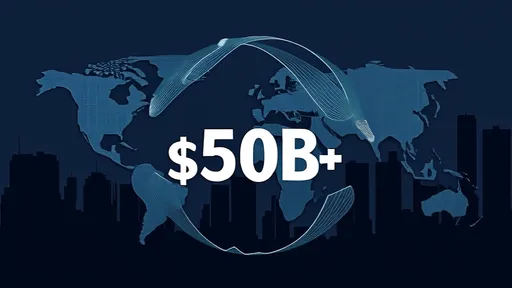
The scale of Saudi Arabia's gaming ambitions becomes clear when examining the numbers. The kingdom has committed nearly $40 billion to gaming-related investments through Savvy Games Group alone, with plans to make Riyadh a global hub for game development and esports by 2030. This represents one of the largest concentrated investments the industry has ever seen, eclipsing even the biggest tech company war chests. For context, Microsoft's landmark acquisition of Activision Blizzard—the largest in gaming history—was valued at $68 billion, making Saudi Arabia's total gaming commitments roughly equivalent to half that historic deal.
Beneath these eye-popping figures lies a calculated economic strategy. Saudi planners recognize that gaming represents one of the fastest-growing entertainment sectors worldwide, with projected revenues exceeding $300 billion by 2025. More importantly, the industry aligns perfectly with Saudi Arabia's youthful demographics—about 70% of the population is under 30, and mobile game penetration exceeds 90%. Unlike oil, digital entertainment offers unlimited growth potential without the environmental concerns haunting fossil fuels.
The esports component of Saudi Arabia's gaming push carries particular significance. Competitive gaming tournaments have emerged as a cultural phenomenon among young Saudis, with local viewership numbers rivaling traditional sports. By positioning itself as an esports powerhouse, the kingdom aims to create new career pathways for its tech-savvy youth while building soft power through international gaming competitions. The recent establishment of the Esports World Cup—a Saudi-backed tournament offering record-breaking prize pools—demonstrates how seriously the country takes this ambition.
Critics, however, question whether this gaming gold rush represents genuine economic transformation or simply the latest vanity project of an oil state flush with cash. Skeptics point to previous failed attempts at diversification, noting that non-oil sectors still contribute minimally to Saudi GDP despite years of investment. There are also concerns about cultural compatibility, as the kingdom's conservative social norms might clash with gaming's typically liberal global community. The 2022 controversy over Saudi-funded LIV Golf's disruption of professional golf serves as a cautionary tale about the challenges of entering established entertainment industries.
Proponents counter that gaming differs fundamentally from previous diversification attempts. Unlike manufacturing or tourism, the digital nature of gaming means Saudi Arabia can compete globally without needing to overcome geographical disadvantages. The country's young population provides a built-in consumer base and talent pool, while sovereign wealth removes the funding constraints that limit traditional gaming companies. Perhaps most importantly, gaming represents a rare industry where Saudi Arabia could realistically achieve global leadership within a decade given sufficient investment.
The technological spillover effects could prove equally valuable. A thriving gaming industry would naturally foster growth in adjacent sectors like artificial intelligence, cloud computing, and advanced graphics—all areas where Saudi Arabia currently lags behind technological leaders. Game development requires cutting-edge software engineering talent that could be redirected to other digital economy initiatives. In this sense, the gaming push serves as both an economic diversification play and a human capital development strategy.
Geopolitical considerations also factor into Saudi Arabia's gaming calculus. As global tensions rise between Western nations and China, the kingdom sees an opportunity to position itself as a neutral hub for digital entertainment. Unlike Chinese gaming companies facing increasing scrutiny abroad or Western firms subject to geopolitical pressures, Saudi-backed entities could theoretically operate across all markets without similar constraints. This strategic positioning could give Saudi gaming investments a unique competitive advantage in an increasingly fragmented global economy.
The environmental implications of this pivot shouldn't be overlooked. While gaming data centers consume substantial energy, their carbon footprint pales in comparison to oil extraction and refining. A successful transition to gaming-led growth could significantly reduce Saudi Arabia's environmental impact while maintaining its position as an economic heavyweight. This explains why climate-conscious elements within the Saudi government have reportedly championed the gaming strategy as part of broader sustainability efforts.
Execution risks remain substantial, however. The gaming industry has proven notoriously difficult to predict, with consumer preferences shifting rapidly and technological disruptions constantly reshaping the competitive landscape. Saudi Arabia's top-down investment approach may struggle to adapt to this dynamic environment, where innovation typically emerges from agile startups rather than state-backed behemoths. There's also the question of whether Saudi society will embrace game development as a prestigious career path or continue favoring traditional professions in government and energy sectors.
Early signs suggest the strategy is gaining traction. Saudi universities have begun offering specialized game development programs, while local startups are receiving generous funding to create culturally relevant content. The recent success of Saudi-developed mobile games in regional markets indicates that homegrown talent can compete internationally given proper support. These developments lend credence to the view that Saudi Arabia's gaming ambitions extend beyond financial investment to encompass comprehensive ecosystem building.
As oil revenues continue funding this digital transformation, the world is witnessing an unprecedented economic experiment. Never before has a petrostate attempted to reinvent itself through interactive entertainment on such a scale. Whether Saudi Arabia succeeds in becoming the "Silicon Valley of gaming" or joins the graveyard of failed diversification attempts will have implications far beyond its borders. The kingdom's gamble represents the purest test case yet of whether oil wealth can successfully buy entry into the knowledge economy.
One thing is certain: the global gaming industry will never be the same. Saudi Arabia's massive investments are already reshaping competitive dynamics, forcing established players to reconsider their strategies amid this new state-backed competition. As the lines between entertainment, technology, and geopolitics blur, Saudi Arabia's gaming vision may well determine not just its own post-carbon future but the next era of digital entertainment worldwide.

By /Jun 23, 2025

By /Jun 23, 2025

By /Jun 23, 2025

By /Jun 23, 2025
By /Jun 23, 2025

By /Jun 23, 2025

By /Jun 23, 2025

By /Jun 23, 2025

By /Jun 23, 2025

By /Jun 23, 2025

By /Jun 23, 2025

By /Jun 23, 2025

By /Jun 23, 2025

By /Jun 23, 2025

By /Jun 23, 2025

By /Jun 23, 2025
By /Jun 23, 2025
